
After the winter bloom, Alphonso orchards in Konkan enter a magical phase—flowers turning into tiny green mangoes. This stage is just as critical as flowering and decides the fruit quality, timing, and farmer income. It’s a careful balance of natural selection and traditional orchard management practiced by our GI‑registered farmers.
Not All Flowers Become Mangoes—And That’s How Nature Works
Each panicle bears hundreds of flowers, but only pollinated flowers convert to fruits. The tree naturally sheds the rest—non‑pollinated and weak flowers, and even some early fruitlets—so that its energy goes to healthy, flavour‑rich mangoes.
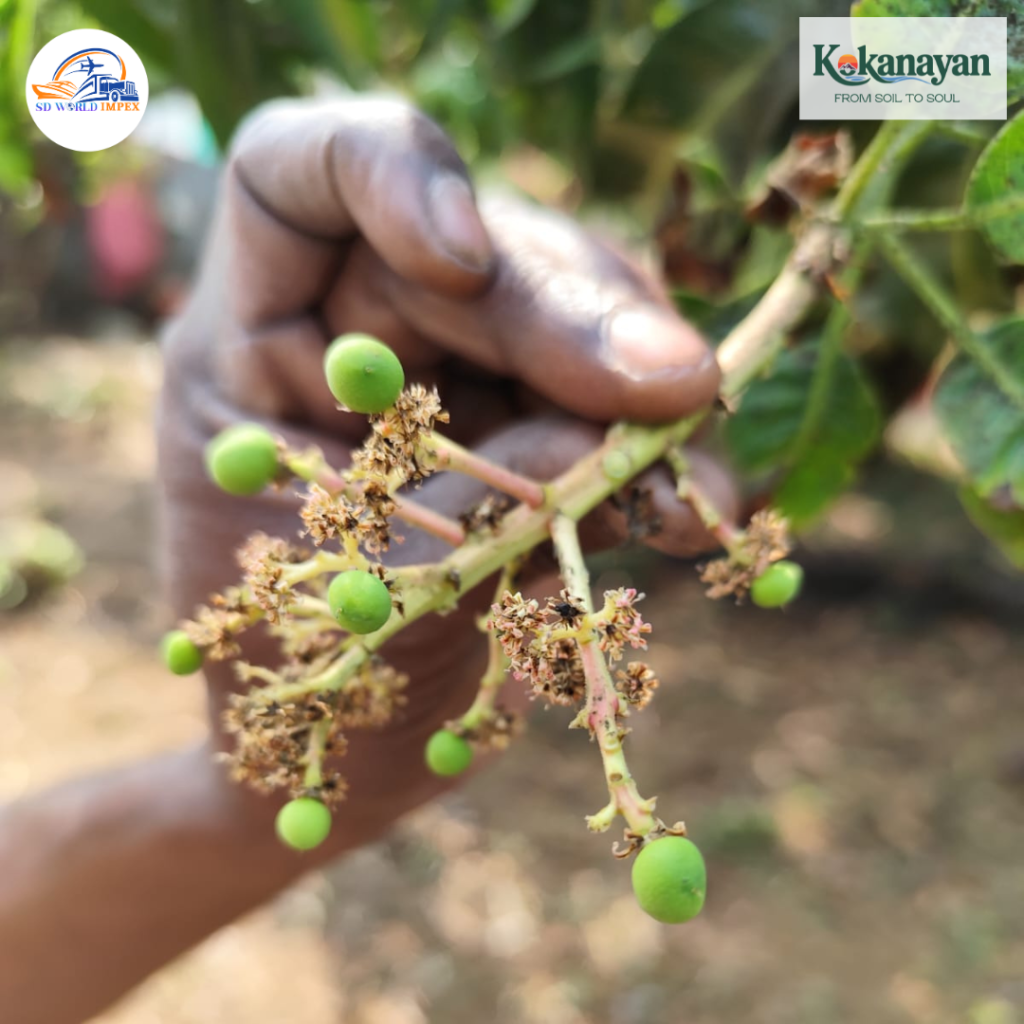
The Traditional Role of Farmers: Helping Nature Choose
Konkan farmers support nature gently—not forcing, but guiding—using age‑old practices.
1) Shaking Branches to Drop Non‑Pollinated Flowers
Farmers gently shake selected branches to let non‑pollinated or dried flowers drop. This avoids wasting nutrients on non‑viable blooms and improves fruit set on the rest.
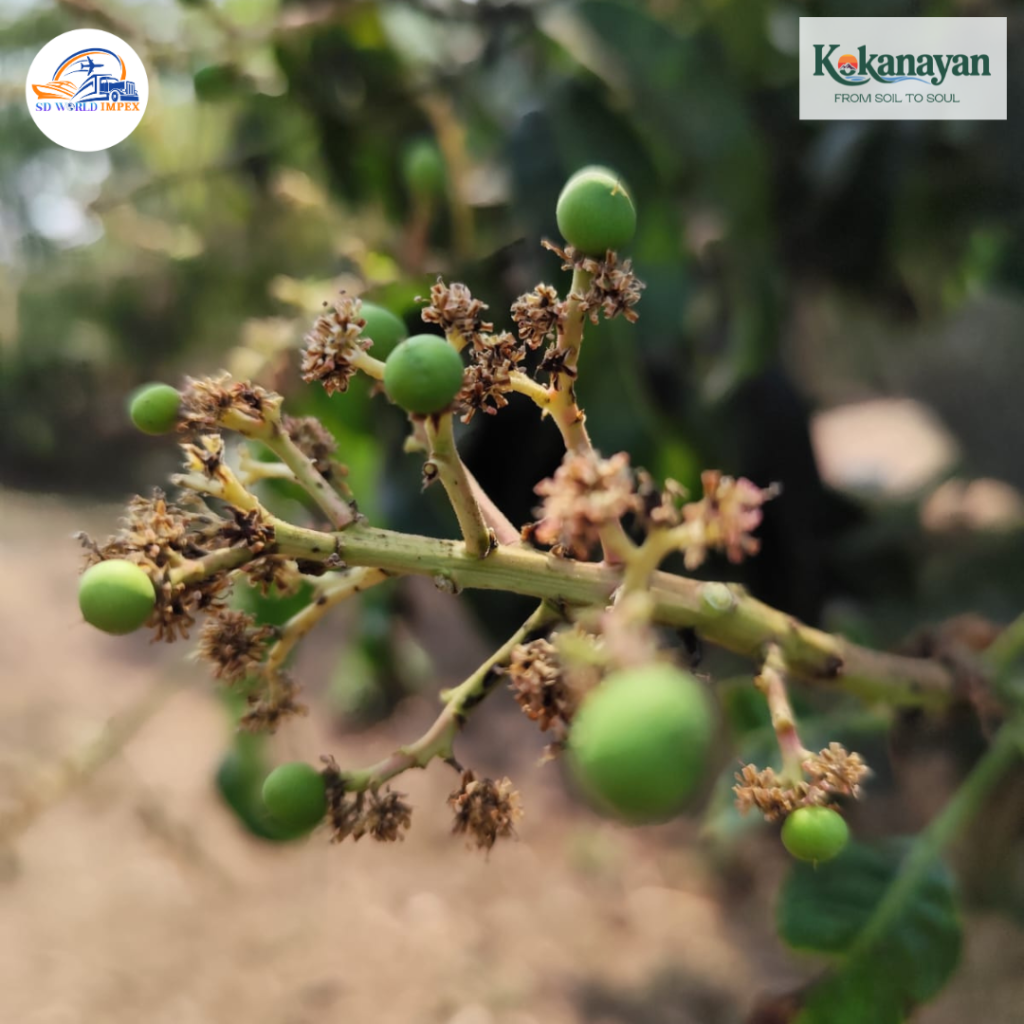
2) Pruning Non‑Productive Panicles & Overcrowded Shoots
Growers trim panicles that didn’t set fruit and thin overcrowded shoots. This improves light, airflow, and nutrient distribution, leading to uniform growth and better size.
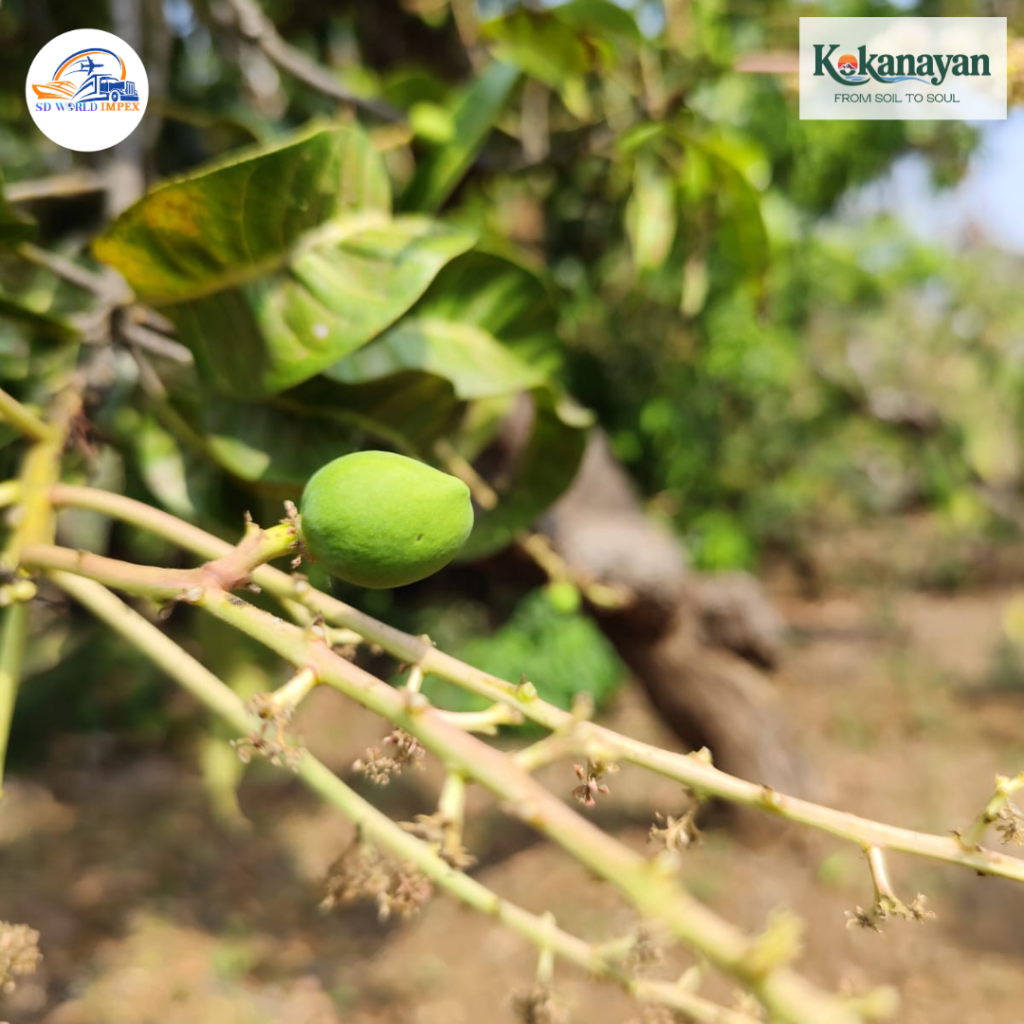
Proper Fruit Setting = Earlier Harvest & Better Prices
Correct thinning and pruning allow the tree to stabilize fruit load and push nutrition to strong fruitlets. The result is earlier fruit development. Early production lets farmers enter the market before peak supply, which typically means better price realization for their hard work and a stable start to the season.
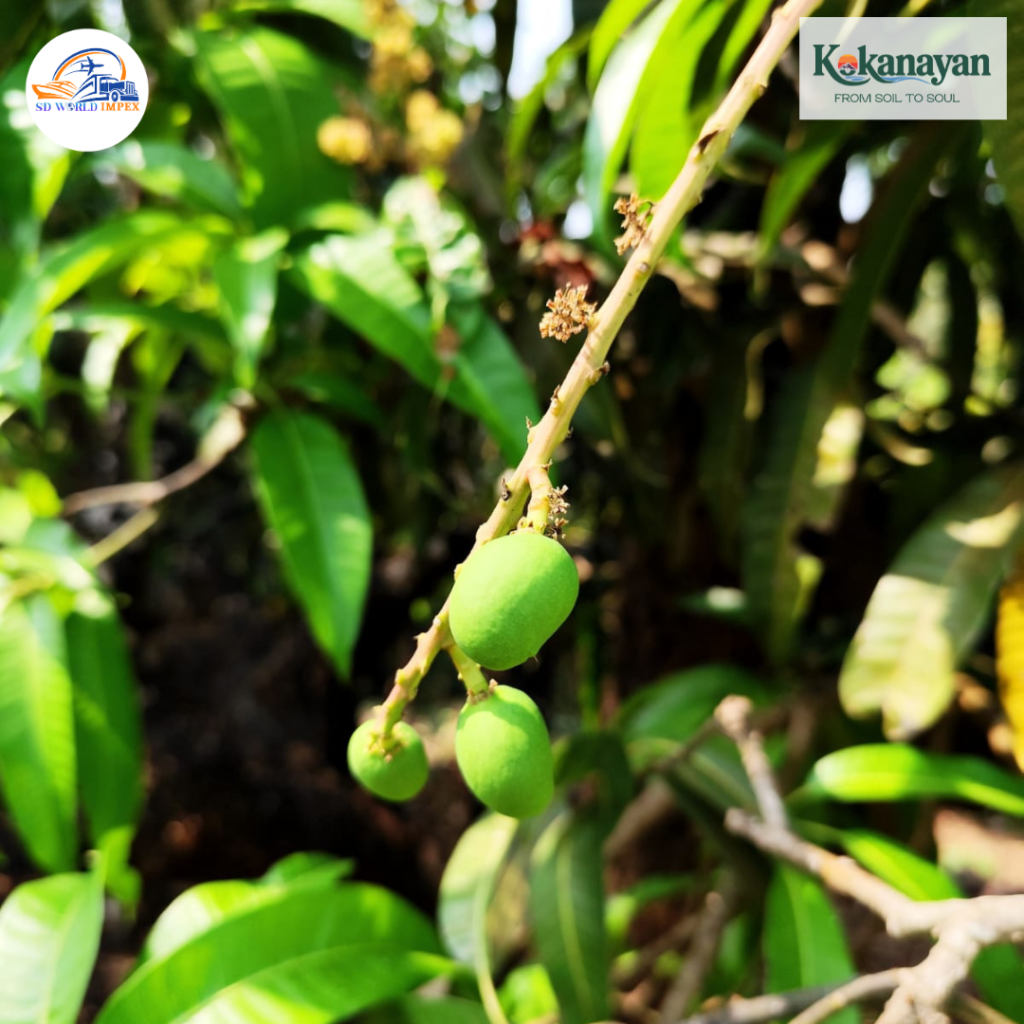
Caring for Baby Mangoes: Nutrition, Water & Protection
Once fruit set begins, farmers focus on:
- Balanced nutrition including key micronutrients (like boron, zinc, magnesium)
- Controlled irrigation to prevent stress and fruit drop
- Orchard hygiene & airflow to reduce fungal pressure
- Targeted, need‑based protection from hoppers, thrips, and early fungi
All of this is done without overloading the tree—because quality beats quantity.
No/Low‑Residue & Organic Commitment: Safe for Our Families, Safe for You
At S D World Impex, we aim to earn your trust with safe, clean produce:
- No or Low Residue Fruits: We closely align with farmers on spray schedules and pre‑harvest intervals to keep residues within safe, approved limits.
- Natural First: Our growers increasingly use neem‑based and natural pest management, organic protectants, and soil‑friendly supplements.
- Family Standard: “If it isn’t good enough for our children or our own family, we won’t sell it.” This principle guides every choice—from orchard to packing.
GI‑Tagged Authenticity All the Way
Konkan Alphonso mangoes carry Geographical Indication (GI) protection. We collaborate only with GI‑registered farmers, and S D World Impex is a GI‑registered Alphonso mango trader. This ensures:
- True origin and traceability
- Traditional cultivation practices
- Consistent, authentic Konkan taste
A Season of Hope: Baby Mangoes to Summer Gold
By late January to February, orchards show steady, green fruitlets holding firm to stems—ready for a calm, even growth phase. With the right care, these tiny mangoes become the golden Alphonso you love—rich aroma, perfect texture, and heritage taste.